

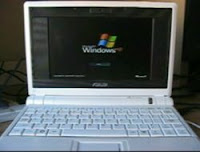
 There are three things that separate low cost ultraportables like the Eee PC from higher end laptop computers. They’re small, lightweight, and cheap. In order to keep cheap in that equation, computers makers like Asus are turning to Linux, the open source operating system that you can install and run on most computers without paying any licensing fees. And while Eee PCs, XO Laptops, and Mini-Notes aren’t exactly taking over the world, this new class of low-cost subnotebook is certainly gaining a lot of attention. And that could lead some folks to believe (rightly) that Linux is a viable alternative to Windows and OS X.
But here’s the thing. Microsoft does want to continue pushing Windows Vista. So while the company is encouraging PC makers to install Windows XP on low-cost machines as an alternative to Linux by providing deep discounts, IDG News Service reports that manufacturers will need to meet a pretty strict definition of ULPC (Ultra low-cost PC) in order to qualify for their cheap XP licenses.
That definition includes a screen that’s less than 10.2 inches, 1GB of RAM or less, a hard drive with 80GB or less, and no touchscreen devices. You’ll also need a 1GHz or slower processor, although Via’s C7-M processors which run up to 1.6GHz are allowed, as will be Intel’s new Atom processor.
That rules most version of the HP Mini-Note out, since all but one model ships with a 120GB hard drive. But that’s probably fine with Microsoft, as the low-cost version of XP is really meant for PC makers who sell their computers in educational markets and developing nations. Computer makers will be able to get an XP Home Edition license for $26 if they sell their laptops in developing countries, while they’ll pay $32 to license XP for use in developed countries like the US.
The HP Mini-Note, on the other hand is targeted at US consumers (and in fact, ships with Windows Vista).
i love eeepc, I hope I can get it soon 🙂
maybe microsoft should realize if people need free software.
this is a beat for microsoft.
—
Busby SEO Test
I must admit that when I first heard of the mini-note coming out with Linux I was quite willing to give it a try. But as we all know, HP failed and failed hard on that account.
….how did they failed?
Instead of welcoming this unexpected revenue and going for it full-bore, MS has just committed suicide:
https://mikecane2008.wordpress.com/2008/05/12/microsofts-ulcpc-nazism-good-news/
Piranhas eat their pray much faster than lions.
These low cost machines will make not only Linux, but also OpenOffice, a mainstream thing. Microsoft is not in a good bargaining position, and will probably have to be much more flexible than that. Soon we’ll see very cool advanced machines running compiz fusion (search for it on youtube for those who have no clue what it is), and then things will look increasingly bad for MS.
Apple may be on safer grounds, but not for much longer, as Macbook Air users will start to feel ridiculous next to the (less than half price) HP mininote… and Apple will either have to join this space or watch others blossom. Of course, they might jump in with a larger, enhanced ipod touch or something, and still keep their beautiful margins there.